News

On 29 February 2016, people living with or affected by a rare disease, patient organizations, politicians, carers, medical professionals, researchers and industry will come together to celebrate the ninth annual Rare Disease Day.
Technological advances in scientific research have placed us in a universe of knowledge that today allows us to speak of more than 8,000 rare diseases (EPOF) that affect 8% of the world population, as determined by WHO. However, governments are not following at the same pace, causing a gap between knowledge of treatment and access to treatment.
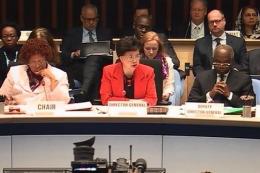
The World Health Organization (WHO) held the first of its twice-yearly Executive Board meetings for 2016 at the end of January.
They say that in the past, governments avoided international scrutiny of their national health policies by evoking sovereignty as a defence. Things have changed over the last fifteen years as global health governance starts taking root.
This year's Congress will focus on 'innovation improving sustainable access: how to boost your reach and impact'.
Excerpts from the 'Presidential New Year Message 2016', by Gabriel Ivbijaro MBE JP, President of the World Federation for Mental Health.
IAPO members CHAIN (the Community Health and Information Network) and UAPO (the Uganda Alliance of Patient Organizations) worked with the WHO (World Health Organization) to hold Uganda’s first Patients for Patient Safety workshop in November 2015.
Welcoming in a new year often brings reflection in our personal and professional lives as we think about what is coming up and what changes we want to make.
IAPO produced 12 newsletters and around 100 articles during 2015. We have compiled the top ten most read articles from the year.
By Brian Kennedy, Executive Director of the Global Alliance for Patient A ccess. In December I had the pleasure of participating in the Latin American Patient Summit on Biotherapeutics, where I offered the assembled advocates some unexpected advice: tell stories.

Pages